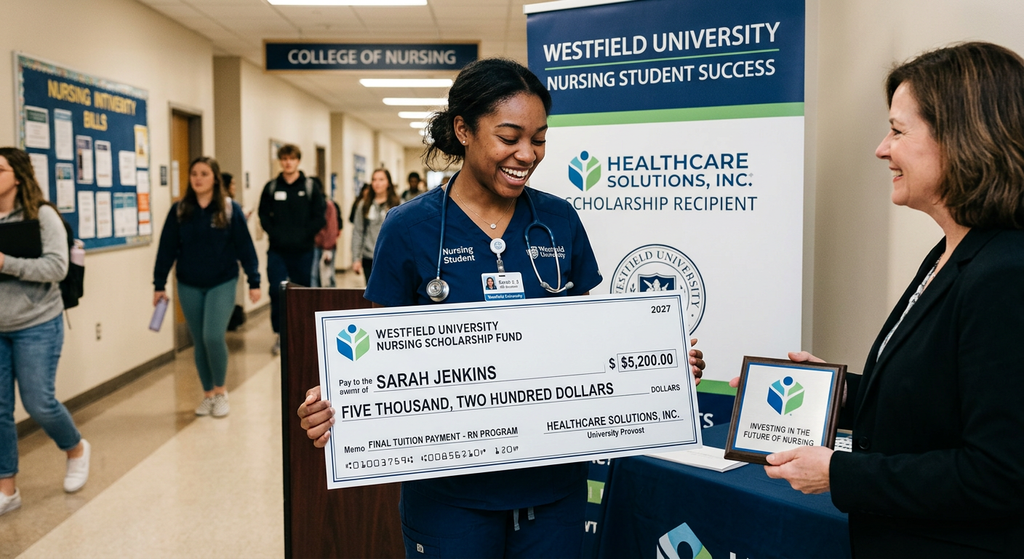
Paying for nursing school is a real concern for most students, and it’s worth knowing the full landscape of options before assuming loans are the only path. Financial aid for nursing students generally falls into a few broad categories, each with its own eligibility rules and trade-offs. This overview covers the types of aid that exist, current amounts, interest rates, and specific eligibility thresholds change over time, so always confirm current details directly with the official source before making decisions.
Federal Financial Aid
The starting point for most students is the Free Application for Federal Student Aid, commonly known as the FAFSA. Submitting the FAFSA determines your eligibility for several federal aid programs at once, and many states and individual schools also use FAFSA information to determine their own aid offers, so it’s worth completing even if you’re unsure whether you’ll qualify for federal aid specifically.
Federal grants, like the Pell Grant, are need-based aid that generally doesn’t need to be repaid. Eligibility depends on financial need as calculated through the FAFSA.
Federal student loans come in a few forms, including subsidized loans (where the government covers interest while you’re in school) and unsubsidized loans (where interest accrues from the start). Federal loans generally offer more flexible repayment options and borrower protections than private loans, which is worth understanding before considering private loan alternatives.
Federal work-study provides part-time employment, often on campus or in a community service role, to help cover education costs while you’re enrolled.
Nursing-Specific Federal Programs
Beyond general federal student aid, there are federal programs specifically designed to address nursing workforce needs, particularly in underserved areas.
The Nursing Corps Scholarship Program, administered through the Health Resources and Services Administration (HRSA), provides funding in exchange for a service commitment working at an eligible healthcare facility with a critical shortage of nurses after graduation.
The Nurse Corps Loan Repayment Program works similarly but applies to nurses who’ve already graduated and are working, or willing to work, at a qualifying facility, offering loan repayment assistance in exchange for a service commitment.
These programs have specific eligibility requirements and application cycles, so checking HRSA’s official resources directly is the most reliable way to understand current requirements and deadlines.
State-Based Aid Programs
Many states offer their own nursing-specific scholarship or loan forgiveness programs, often tied to a commitment to practice within that state after graduation, sometimes specifically in rural or underserved areas. These programs vary significantly from state to state in both structure and availability, so checking with your specific state’s higher education agency or board of nursing is worth doing directly, rather than assuming a program that exists in one state applies elsewhere.
Institutional Aid
Many nursing schools offer their own scholarships, grants, or tuition discounts, separate from federal or state programs. These can be based on academic merit, financial need, or sometimes specific criteria like being a first-generation college student or pursuing a particular specialty track.
It’s worth checking directly with the financial aid office of any school you’re considering, since institutional aid often isn’t automatically applied and may require a separate application or essay.
Private Scholarships
Numerous private organizations, professional nursing associations, and foundations offer scholarships specifically for nursing students. These range from small, one-time awards to more substantial, renewable scholarships, and eligibility criteria vary widely, some are open to any nursing student, while others target specific groups, specialties, or backgrounds.
Because there are so many of these scattered across different organizations, dedicating real time to searching and applying broadly, rather than relying on one or two large scholarships, tends to be a more effective strategy for many students.
Employer Tuition Assistance
If you’re already working, particularly in a healthcare setting, it’s worth asking your employer directly whether they offer tuition assistance for nursing education. Many hospitals and healthcare systems offer this kind of benefit, sometimes in exchange for a post-graduation employment commitment, as part of their own effort to build their nursing workforce.
This benefit isn’t always advertised prominently, so a direct conversation with your HR department is often the most reliable way to find out what’s actually available to you.
Military and Veteran Benefits
Active-duty service members, veterans, and sometimes their family members may be eligible for education benefits that can apply to nursing school, including programs administered through the Department of Veterans Affairs. Additionally, several of the armed forces offer their own nursing-specific scholarship and commissioning programs for students willing to serve as a nurse in the military after graduation.
Given the complexity and variety of these programs, working directly with your school’s veterans affairs office, if it has one, or with an official VA benefits counselor, is the most reliable way to understand what you specifically qualify for.
Federal Loans vs. Private Loans: What’s the Difference?
If loans become part of your financial aid picture, understanding the general differences between federal and private loans matters before borrowing from either source.
Federal loans typically offer more flexible repayment plans, including options tied to income in some cases, along with borrower protections like deferment or forbearance during financial hardship. Private loans, offered through banks or other lenders, generally don’t come with these same built-in protections, and terms vary significantly between lenders.
For most students, exhausting federal aid options before considering private loans is the more cautious approach, given the additional flexibility federal loans generally provide if your financial circumstances change after graduation. This is general guidance, not financial advice specific to your situation, a financial aid counselor or advisor can help you think through what’s right for your circumstances.
Understanding the FAFSA Timeline
The FAFSA opens for a new academic year several months before that year begins, and submitting it as early as possible after it opens is generally recommended, since some aid programs, particularly certain state and institutional grants, are awarded on a first-come, first-served basis until funds run out.
You’ll need documentation of income and, if applicable, your family’s financial information to complete the form. Many schools also have their own internal deadlines for considering you for institutional aid, which can be earlier than federal deadlines, so it’s worth checking directly with each school’s financial aid office rather than assuming one deadline applies everywhere.
Building a Realistic Aid Strategy
Most students end up combining several of these sources rather than relying on just one. A reasonable approach is starting with the FAFSA to establish your federal and state aid eligibility, then researching institutional aid at each school you’re considering, and dedicating separate time to searching and applying for private scholarships, since these often have their own distinct deadlines and requirements.
Frequently Asked Questions
Do I need to complete the FAFSA even if I don’t think I’ll qualify for federal aid?
Yes, it’s generally worth completing anyway, since many state and institutional aid programs also use FAFSA data to determine eligibility, even for aid that isn’t federally funded.
Can I combine multiple types of financial aid?
In most cases, yes. Federal aid, state aid, institutional aid, and private scholarships can often be combined, though total aid is usually capped at your school’s cost of attendance.
Are nursing-specific scholarships harder to get than general scholarships?
Not necessarily. Because they’re specifically targeted at nursing students rather than the general student population, competition can sometimes be less intense than for broader, more widely known scholarships.
What happens if I accept a scholarship with a service commitment and then change my mind?
This varies by program, but many service-commitment scholarships include penalty clauses, sometimes requiring repayment, if the commitment isn’t fulfilled. Read the specific terms carefully before accepting any award tied to a future service obligation.
Should I accept all the loan aid I’m offered, even if I don’t need all of it immediately?
Not necessarily. Loan aid can generally be declined in part or in full, and borrowing only what you actually need, rather than the maximum offered, is a reasonable approach many financial aid counselors recommend.
This article provides a general overview of financial aid categories and does not constitute financial advice. Program availability, eligibility requirements, award amounts, and deadlines change and vary by source, always confirm current details directly with the relevant federal agency, state agency, school, or organization before making financial decisions.
