Online Nursing Programs: What Students Should Know
Online options have become a normal part of nursing education but “online nursing program” means different things depending on the degree level, and there are some real considerations worth understanding before you enroll.
A note on our directory: we don’t currently have verified data on which specific schools in our directory offer online options for which programs, so this guide covers general considerations rather than pointing you to specific filtered listings. We’re working on improving this over time.
Not all nursing education can be fully online
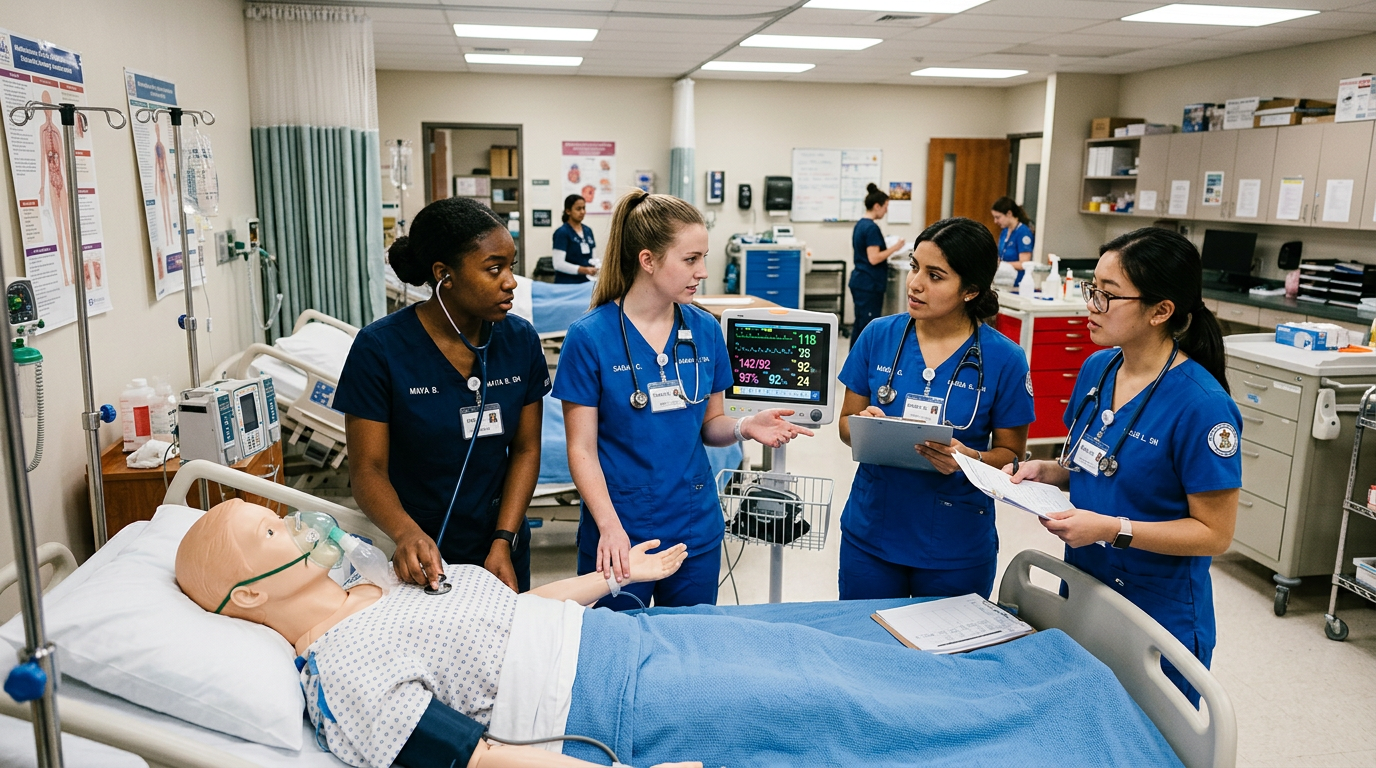
This is the most important thing to understand upfront: clinical hours the hands-on, supervised patient care portion of nursing education generally cannot be completed online, regardless of degree level. What varies is how much of the rest of the program (lectures, coursework, discussions) is offered online, and how clinical placements are arranged.
How this plays out differently by degree level
Entry-level programs (CNA, LPN/LVN, ADN, traditional BSN). These almost always require significant in-person time, since students are learning foundational hands-on skills for the first time. Fully online options at this level are rare; “online” usually means some coursework is online while labs and clinicals remain in person.
RN-to-BSN and RN-to-MSN bridge programs. These are where online education is most common and most developed. Since students are already licensed, working RNs with existing clinical skills, the added coursework (leadership, research, community health) lends itself well to online delivery often with any required practicum hours arranged at or near the student’s existing workplace.
Graduate programs (MSN, DNP, post-master’s certificates). Many of these offer a substantial online component for coursework, while clinical/practicum hours are arranged at approved sites, sometimes near the student’s home rather than requiring relocation.
Questions worth asking any program marketed as “online”
- Exactly which parts of the program are online, and which require in-person attendance?
- If clinical hours are required, how and where are placements arranged? Does the school arrange them, or is that the student’s responsibility?
- Is the program accredited by a recognized nursing accreditor? (Online delivery doesn’t change this requirement.)
- Are there any in-person requirements, like periodic on-campus intensives?
- How is the program structured: self-paced, or fixed weekly schedules with real-time class sessions?
A word of caution
Because online nursing programs are popular, they’ve also attracted some lower-quality operators. Accreditation status matters just as much for an online program as an on-campus one; don’t skip verifying it just because the format is convenient.
This guide is for general educational purposes. Confirm current program format, accreditation, and clinical placement policies directly with any school you’re considering.