How to Become an LPN/LVN
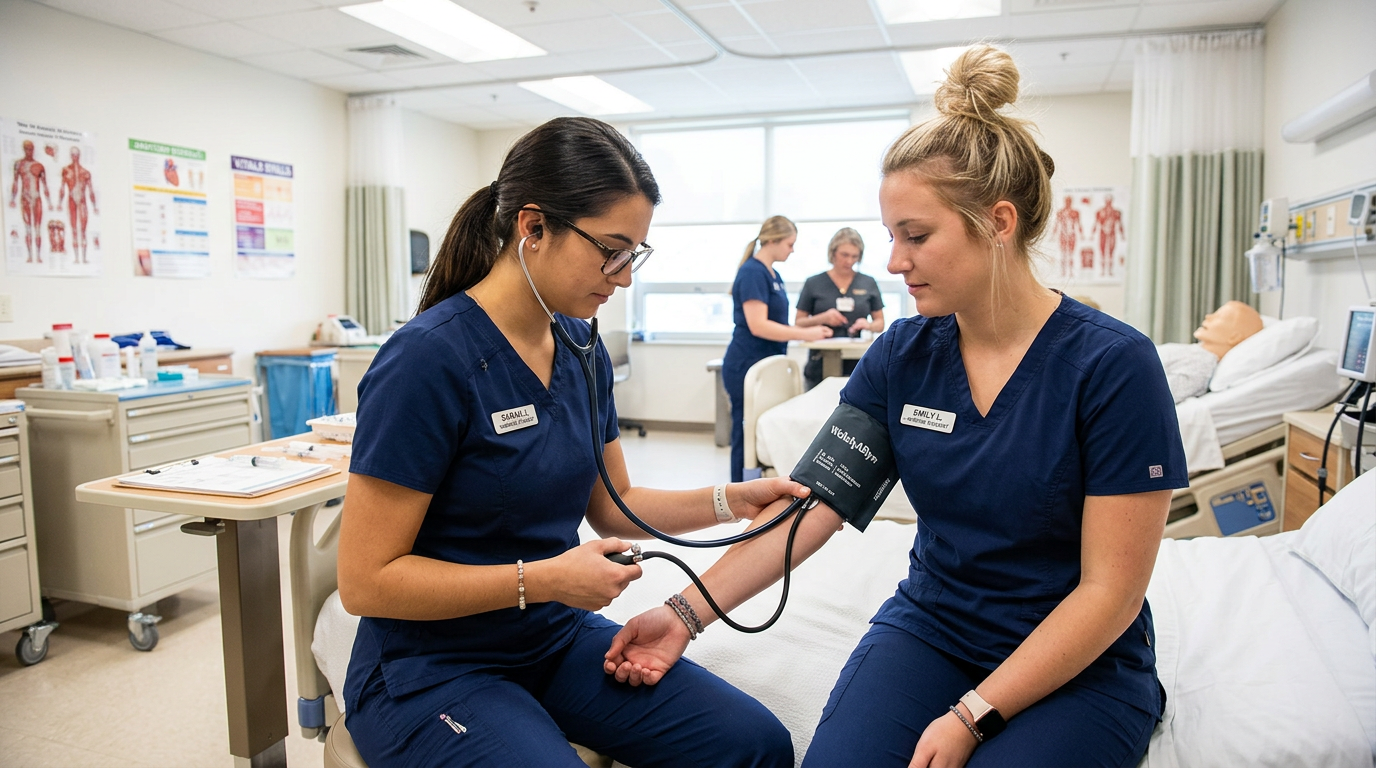
Practical nursing is one of the more direct paths into nursing, typically faster than an RN program, with a clear, well-defined role in patient care. Here’s how the process works.
Requirements vary by state. Always confirm current details with your state’s board of nursing before enrolling in a program.
What an LPN/LVN actually does
Licensed Practical Nurses (LPNs) and Licensed Vocational Nurses (LVNs) play the same role under two different names, depending on the state provide basic nursing care under the supervision of RNs and physicians. This includes monitoring patients, administering certain medications, dressing wounds, and assisting with daily care. Texas and California use the title “LVN”; every other state uses “LPN.”
Step 1: Complete a practical nursing program
These programs are typically offered as certificates or diplomas through community colleges, technical schools, or vocational programs, usually taking around 12 months to complete (sometimes a bit longer). Programs combine classroom instruction with supervised clinical experience.
Step 2: Pass the NCLEX-PN
After graduating, candidates take the NCLEX-PN (National Council Licensure Examination for Practical Nurses) a standardized exam testing readiness for entry-level practical nursing practice.
Step 3: Get licensed in your state
Passing the exam is followed by applying for licensure through your state’s board of nursing, which typically includes a background check and other state-specific requirements.
Where LPNs/LVNs work
Nursing homes and long-term care facilities are especially common settings, along with hospitals, physicians’ offices, home health, and rehabilitation centers. Scope of practice: what an LPN/LVN is legally allowed to do varies noticeably by state, so the day-to-day role can look different depending on where you practice.
What comes next
Many LPNs/LVNs use the role as a foundation before advancing further. If becoming an RN is the eventual goal, look into LPN/LVN-to-RN bridge programs, which give credit for existing licensure and clinical experience rather than starting a nursing education from scratch.
This guide is for general informational purposes and doesn’t guarantee program admission, licensure, or employment. Confirm current requirements with your state’s board of nursing.